


Sterling Home Remodeling in Redmond: A Homeowner’s Guide
Plenty of Redmond kitchens look sharp on reveal day and then start talking back: caulk lines opening at the backsplash, cabinet hinges sagging under the weight of a full dish rack, a tile edge that’s no longer flush with its neighbor. None of that means the contractor was dishonest. It means the durability calls got made during installation instead of during planning. “Sterling” home remodeling in Redmond isn’t about a luxury price tag. It’s about the gap between a remodel that holds through five wet-side winters and one that shows failure by year two.
This guide is about closing that gap. If reading it makes you want a second set of eyes on your plan, call (425) 675-1664 for a free estimate.
Why does Pacific Northwest weather change what “durable” means in Redmond?
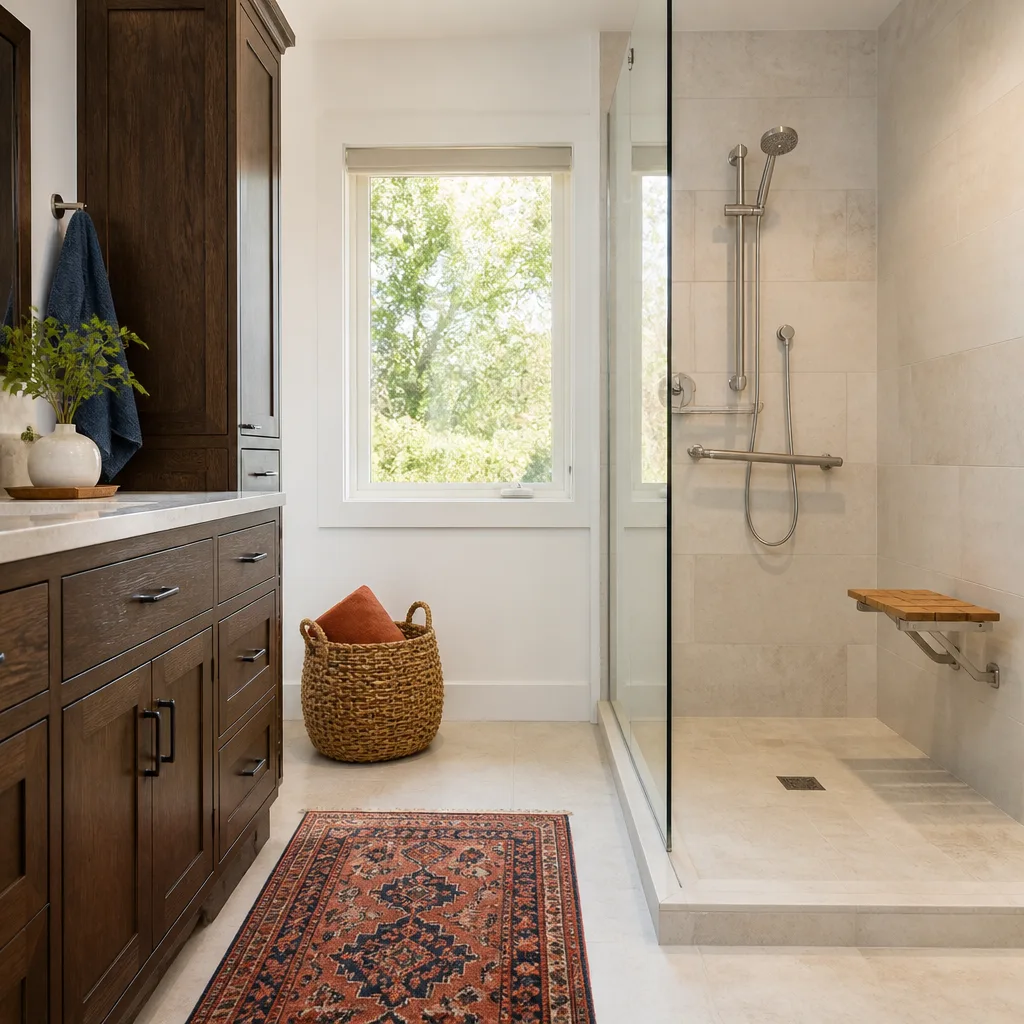
Redmond’s climate stresses a house differently than most of the country. Long damp stretches, limited drying in the cooler months, and indoor humidity that spikes in bathrooms and kitchens all push moisture into places a dry-climate remodel never has to worry about. Temperature swings through the year work on materials at the same time. Durability here is a moisture-management story first and a cosmetic one second.
Three decisions carry most of that weight:
- Vapor management behind tile. A waterproofing membrane under wet-area tile keeps moisture from reaching the substrate. Skipping it, or applying it thin at corners and transitions, is one of the most common causes of grout failure and loose tile in Redmond bathrooms.
- Paint systems rated for high-humidity interiors. Bathroom and kitchen paint needs to tolerate repeated wet-and-dry cycles and resist mildew on the film. The right primer and topcoat matter more than the color card.
- Substrates that move without cracking. Redmond’s seasonal expansion and contraction is hard on rigid materials fastened without room to move. Backer board, underlayment, and joint spacing all need to account for it.
None of this is exotic. It’s just the kind of thing that gets skipped when a schedule gets tight and nobody wrote it into the plan. Detailed bathroom remodeling starts with the membrane, not the tile.
How do you read a material spec sheet for longevity, not looks?
A spec sheet tells you what a product is designed to survive. Most homeowners read the color and the price. The longevity markers are further down, and they’re the ones worth ten minutes of your time.
- Luxury vinyl plank: look for the wear layer thickness, usually stated in mils. A thicker wear layer resists scuffs and surface wear longer, which matters in entryways and kitchens where grit gets tracked in.
- Cabinetry: check the face frame and box construction. Solid wood or quality engineered frames with proper joinery hold hinges and drawers far better than stapled particleboard boxes. Brand matters here because the construction specs are published and comparable: KraftMaid and Wellborn both build to a documented standard you can hold them to.
- Tile grout: note the grout type and the joint width the manufacturer specifies. Wet areas need a grout rated for them, and joint width has to match what the tile and substrate can handle without cracking.
- Countertops: quartz surfaces such as Cambria, Silestone, and Caesarstone are engineered and non-porous, which makes them a practical choice for kitchens that see real cooking. Read the care requirements, not just the sample.
When a product is specified by name and tier, you can check the numbers yourself. That’s the difference between a confident choice and a hopeful one.
Why is millwork and trim a quality signal worth watching?

Trim and millwork show you how a crew thinks. Blocking, nailers, and backing are the parts you never see once the drywall goes up, and they’re the parts that decide whether a cabinet stays tight to the wall, a handrail feels solid, or a door casing stays straight through a few heating seasons. A crew that runs proper backing and framing is a crew that plans. A crew that skips it usually skips other unglamorous steps too.
In Redmond homes, we look for a few telltale signs during a walkthrough:
- Whether blocking is called out in the framing plan for anything that will hang on a wall.
- How trim joints are fit at inside corners and miters, and whether the material is acclimated before installation.
- Whether door and window openings are squared and shimmed properly, since casing problems usually start there.
- How the crew handles transitions between rooms and materials, where a rushed job shows first.
None of that is decorative. It’s structural. Detailed kitchen remodeling lives or dies on the same backing and framing work as the trim does.
Should you phase a remodel or do it all at once?
Phasing usually produces better long-term results than a compressed all-at-once budget, and the reason is simple: structural and mechanical work needs to be right, not fast. When a budget forces everything into one pass, the unglamorous items get shorted to make room for finishes, and the finishes inherit the problem.
A phased scope typically runs in this order:
- Structural and mechanical first. Framing corrections, electrical, plumbing rough-in, and anything inside the walls. These are the expensive, invisible items, and they set the ceiling on everything else.
- Envelope and moisture control. Waterproofing, ventilation, and the surfaces that keep moisture where it belongs.
- Floors and substrates. Getting the base right before anything sits on top of it.
- Finishes and fixtures last. Cabinetry, countertops, tile, paint. The part guests notice, and the part that lasts only if phases one through three were done properly.
Phasing also gives you time to pick materials deliberately instead of under pressure. It’s the same reason a good home remodeling plan starts with a scope conversation, not a shopping trip.
What should you ask about warranty before you sign?

Ask two questions, in this order: what does the contractor warrant, and what does the manufacturer warrant? They’re different, and knowing which covers what saves a headache later. A workmanship warranty usually covers installation errors: a leaking shower pan, a cabinet that pulls from the wall, a floor that lifts. A manufacturer warranty covers material defects: a failing finish, a cracked slab, a component that stops working.
A few more questions worth asking:
- How are claims handled locally? Who do you call, and what’s the response process?
- Does the warranty transfer if you sell the house?
- Which brands are being specified, and are their warranties registered on your behalf?
- Which parts of the project carry no warranty at all?
We work with named brands across cabinetry, countertops, plumbing fixtures, roofing, windows, and doors precisely because that documentation exists and can be checked. Remodeling Redmond handles the full scope under a single project agreement, so there’s one place to go when a question comes up.
When should you call a pro?
If the work moves water, electricity, or structure, it belongs with a licensed professional. That covers wet-area waterproofing, electrical and plumbing rough-in, and anything that changes a wall, opening, or roofline. Paint and trim can be a careful DIY project; a shower membrane and a load-bearing header really shouldn’t be. Our technicians have up to 13 years of experience, and the local pro is licensed and insured as their state requires. We answer 24/7. Fast dispatch from 7am to 7pm, Sunday through Friday; we’re closed Saturday.
Related services in Redmond: kitchen remodeling, bathroom remodeling, home remodeling, and Remodeling Redmond.
The Bottom Line
Sterling remodeling in Redmond comes down to planning decisions, not installation flourishes. Moisture management behind tile. Paint rated for humid rooms. Substrates that handle the seasonal swing. Spec sheets read for wear layer and construction, not just color. Trim and blocking done right. A phased scope that lets structure and mechanical work land before finishes. Warranties you understand before you sign. Get those right and the reveal day holds up a lot longer.
If you’re in Redmond and need help, Remodeling Redmond offers free estimates. Call (425) 675-1664.
Frequently Asked Questions
It means a remodel built to hold up in a wet Pacific Northwest climate, not one priced for luxury. The determinant is planning: moisture control, material specs, and phased scope. Call (425) 675-1664 for a free estimate.
A well-planned remodel is designed to hold through years of Redmond’s seasonal wet-and-dry cycles. Poor moisture management shows up within a couple of years as failing grout or caulk. A written line-item estimate will spell out what’s included.
Cost depends on scope, material tier, and phasing, so it’s set per job by a written estimate. Our estimates are free and line-itemed, with fixed pricing and no change orders. Call (425) 675-1664 to schedule yours.
Yes. Permits are pulled and inspections passed on the work that requires them, and we work with you to confirm what your project needs before work begins. Call (425) 675-1664 for a free estimate.
Written by the team at Remodeling Redmond.
Need Construction Help?
Call Remodeling Redmond - the local pro we connect you with is licensed and insured, here with fast help in Redmond.
(425) 675-1664