
Last updated November 25, 2026








Free written scope consultation - allowances, timeline, and change-order rules on paper before a single trade is scheduled
Construction Warning Signs: A Redmond Homeowner’s Reference Guide
The contractor who disappears mid-project makes the news. The contractor who finishes on time but skips a moisture barrier behind the tile, misses a flashing detail, or uses the wrong fastener schedule for Redmond’s wind zone – that’s the one who costs Redmond homeowners the most money, quietly. Three years later a shower wall bulges, a window sill softens, and the blame trail has gone cold. This guide is about the subtler warning signs: the technically legal, fully invoiced contractor whose work fails on a clock you can’t see yet. We’ll walk through material substitutions, permit avoidance, subcontractor chains, job-site behavior, and what the first twelve months after completion should actually look like.
Quick Answer
The most costly construction warning signs in Redmond aren’t fraud – they’re under-resourcing: undisclosed material substitutions, permit avoidance on small projects, subcontractor crews meeting for the first time, and sloppy job-site protection that shows up as damage months later. Judge a contractor by how they document, permit, and stage the work, not just the bid number. A written line-item estimate, named products, pulled permits, and a clean, organized job site are the four signals that separate a durable job from an expensive one.
Styles & brands we work with
- Kitchen remodeling
- Bathroom remodeling
- Home additions & ADU
- Roofing
- Windows & doors
- Driveway & pavers
- Fence
Table of Contents
- Material Substitution: The Quiet Warning Sign
- Permit Avoidance Patterns in Redmond
- Subcontractor Chain Red Flags
- Job-Site Behavior That Predicts Quality
- Protecting Existing Finishes During Demolition
- Post-Completion: What the First 12 Months Reveal
- Questions to Ask Before You Sign
Material Substitution: The Quiet Warning Sign
Material substitution is when the contractor installs a product other than the one named in your contract – usually without telling you, and usually because the swap protects their margin. It’s rarely dangerous. It’s almost always expensive in three years. The subtle version: you specified a countertop brand, and an off-brand factory-second arrives with similar coloring. You specified a siding product with a certain wind rating, and a lower-tier panel appears. Nothing looks wrong on day one. Everything looks wrong when the warranty claim is denied because the paperwork names one product and the wall holds another.
Redmond’s wind exposure makes this a real money issue outdoors as much as indoors. Siding and roofing products rated differently perform differently at the seams and fasteners, and the difference shows up in the first serious windstorm, not in the first month.
What to watch for:
- The contract names a brand and model, then a supplement says “or equivalent” with no specification attached. “Equivalent” with no spec is a blank check.
- The delivered product arrives with labels removed, in unmarked boxes, or without visible product markings on the pallets.
- The crew installs from a plan set that lists one product while the delivered sticker says another. Ask for the sticker match before installation.
- The contractor asks you to approve substitution “because it’s in stock and faster.” Ask what it’s rated for at wind or moisture performance, and what the warranty says, before agreeing.
Written line-item estimates that name the product, manufacturer, and model are the defense. We write estimates that specify brands rather than categories, because a homeowner who knows they’re getting a Cambria quartz surface versus a field-fabricated stone is protected at contract signing, not after installation. The same logic applies to roofing: you should see GAF, CertainTeed, or Owens Corning named on the sheet, not “architectural shingle.” When the specification is specific, there’s nothing to quietly substitute.
Permit Avoidance Patterns in Redmond
Permits exist because most of a house’s expensive failure modes – framing changes, electrical panel work, plumbing relocations – happen where you can’t see them. A contractor who avoids permits isn’t being efficient. They’re betting that no one looks at the work. Redmond’s residential permitting requires the work to be inspected, and that inspection catches the shortcuts that would have bitten you in year three.
Certain projects are the most tempting to skip, because the work is quick and the permit is annoying. Those are also the ones where skipping hurts most:
- Bathroom remodels with plumbing relocation. Moving a drain or supply line without inspection is a leak waiting for a wall cavity.
- Kitchen remodels with electrical panel changes. A kitchen circuit is a code-sensitive change. Unpermitted work here is the kind insurers debate after a fire.
- Structural wall removal. “It’s not load-bearing” is a claim made by the wrong person far too often. It’s your home on the line, not theirs.
- Deck and exterior additions. Fastener schedules and attachment points are inspection items for a reason.
- Window and door replacements. The flashing detail is the difference between a dry wall and a wet one.
Some projects genuinely don’t require a permit – repainting an interior, replacing a fixture in the same location. A contractor who tells you that accurately is trustworthy. A contractor who tells you all projects are fine without a permit is telling you something about their process. If anything feels vague, ask your city’s building department directly. They’re the source of truth and they’d rather answer a phone call now than inspect a problem later.
Subcontractor Chain Red Flags
Most remodelers use subcontractors. That’s normal and often produces better work, because a specialist does the plumbing, the electrical, the tile, and the painting. The warning sign isn’t the use of subs. It’s a contractor who cannot tell you who the subs are, how long they’ve worked together, or who is responsible when their trades overlap. When crews meet for the first time on your project, their coordination gets learned on your walls.
Watch for these signals before signing:
- No named subs, no history. The contractor can’t say which electrical or plumbing company is coming, or how long they’ve worked with them. The good ones volunteer this.
- Sequencing that looks improvised. A schedule that doesn’t put rough-in before drywall, or that has the tile setter arriving before plumbing inspection, is a schedule written on the hood of a truck.
- One trade blamed daily. When the framing crew blames the plumber and the plumber blames the framer, there’s no project lead. In a well-run remodel, the general contractor owns the coordination.
- Your questions route sideways. You ask the lead about the tile schedule and are told to call the tile sub yourself. You’re paying for one contract. Manage one relationship.
- The subs aren’t the ones your estimate priced. If the names change between the estimate and the start of work, ask why. Sometimes it’s fine. Sometimes it’s a margin move.
Single-contractor coverage is the fix. When a remodeler covers kitchen, bathroom, flooring, and painting under one agreement, the sequencing problem becomes internal. There’s no mystery about which crew is next, because the same project lead hands it to the next trade. That’s part of why we structure scope across multiple service lines rather than passing the job around: the coordination is the contract.
Job-Site Behavior That Predicts Quality
You can predict the quality of a finished remodel in the first week by watching the job site. Crews that protect what’s already finished tend to protect what they build. Crews that treat the house as their own staging yard tend to skip flashing details and forget insulation, because they don’t have a habit of care. A messy job site isn’t an aesthetic complaint; it’s a leading indicator.
What a well-run site looks like:
- Materials are staged and covered. Lumber and cabinetry off the ground, tile on pallets, drywall flat and dry. Materials stored in a wet Redmond autumn lose the performance they were sold with.
- Existing floors and stairs are protected. Ram board or rosin paper on traffic paths, corner guards on doorways, plastic sheeting on stair rails. A crew that drags debris across your oak floors is telling you how they’ll treat tile backer.
- Dust containment is real. A zippered barrier or a sealed plastic wall at the edge of the work, not a hanging sheet taped at two corners. If the barrier is an afterthought, the indoor air quality is too.
- Trash goes out daily. Piles of demo debris are a hazard and a sign of no supervision. The end-of-day cleanup is a rhythm, not an occasional gesture.
- One named lead on site. Someone should be able to answer your question that morning without checking with “the office.” A rotating cast of crew leaders, no clear lead, and daily confusion are a bigger red flag than a slow first week.
If the site looks tidy on day three, the odds go up that the job reads the same on day ninety. If it looks chaotic on day three, the odds go down sharply.
Protecting Existing Finishes During Demolition
Demo is where the quality story is written. It’s also where shortcuts happen that no one sees until something fails. Two habits distinguish a careful demo from a fast one: how the crew handles the boundary between demo and finished space, and how they handle hidden details in the wall assembly once the drywall is off.
For a bathroom remodel, the boundary matters because the rest of the house is still in use. Hallways, stairs, adjacent bedrooms – all of it has to survive the tear-out. For a bathroom remodeling project in Redmond, where humidity is a constant through fall and winter, the moisture management inside the wall assembly is as important as the fixtures. A careful crew uses a waterproofing system that handles movement and moisture – Schluter is a name we specify often for tile showers – and takes the extra step of ensuring the substrate is dry before waterproofing. A fast crew skips right over that and tiles on a wet backer.
Specific demo warning signs:
- No dust barrier before the first hammer swing. Dust gets everywhere and stays. Insist on a barrier before demo starts, not after the first complaint.
- Existing floors unprotected on traffic paths. A crew that doesn’t care about scratching the hallway will be less careful on the tile.
- Framing exposed without inspection. Rotted wood, termite damage, or out-of-square framing all look obvious once the wall is open, and all require a decision. If the crew tiles right over the discovery without a conversation, that’s a warning.
- Waterproofing skipped at changes of plane. Showers leak at the corners and the curb, not the flat surfaces. Ask how the crew handles those specific spots.
- Exterior penetrations left unsealed. Vents, dryer exhausts, hose bibs – each one is a spot where water enters later. In a Redmond climate, the seasonal wet is the test every penetration gets.
Consider the envelope with the interior. A home remodeling scope that includes a kitchen and a bathroom is also a scope that should think about siding, roofing, and window flashing. Those are the areas where the first twelve months decide the next ten years.
Post-Completion: What the First 12 Months Reveal
The first year is diagnostic. Almost every house settles a small amount, and almost every new installation has a couple of minor adjustments. What separates normal settling from an installation defect is pattern, location, and timing. Knowing the difference is how you use the warranty you paid for, before it’s too late.
Tile and grout. Hairline cracks in grout at the floor-to-wall joint are normal settling. Cracks that run across the field of the tile, or grout that crumbles at the corners of a shower, are not. That second pattern usually means movement in the substrate, or a waterproofing failure – an install issue, not settling. Call it in the first year.
Flooring. A few small gaps at the seams in the first heating season are normal, especially with wide-plank hardwood. Cupping – where the edges lift and the center dips – is a moisture event, which means either the subfloor was wet at installation or the floor got wet after. Both are worth a conversation. A floor that begins to squeak in one room over six months is a fastener issue; a floor that squeaks everywhere in three weeks is a fastening method issue.
Exterior work. Paint that fails on one section of siding in the first year is a prep problem – probably moisture in the wood before paint. A roof leak that appears at a chimney or a valley in the first rainy season is a flashing detail, not a shingle failure. A window that fogs or weeps inside the first year is an installation issue, and should be addressed while the product warranty is fresh.
Doors and windows. Sticking in the first summer, if the remodel was in the winter, is often normal wood movement. Sticking every season, or a gap you can see daylight through, isn’t. A window that leaks during a driving rain is a flashing or sealant issue that should be caught before rot sets in.
Keep a simple log. Photograph and date what you notice. If the answer from the contractor is “that’s normal settling” and the pattern says otherwise, get a second opinion. Contractors who warranty their work will come back for the first-year checks. Contractors who won’t are the ones who already knew.
Questions to Ask Before You Sign
What you ask before signing determines what you get after. These questions are the fastest filter for the warning signs above, because a well-organized contractor can answer them without homework, and an under-resourced one can’t.
- Give me the line-item written estimate with named products. Specific brands, specific models, specific quantities. If it says “or equivalent,” ask for the spec that defines equivalent.
- Which permits will you pull, and which will I see on the door? The posted permit card is your assurance that inspection is happening. Ask to see it.
- Who are the electrical, plumbing, and tile subs, and how long have you worked with them? Names, not “our subs.” A good contractor volunteers them.
- What’s the schedule, and who’s the project lead? If the answer is a range and no name, that’s a red flag.
- What’s the warranty, in writing? Workmanship warranty, product warranty, and what triggers each. Get it in the contract.
- How will you protect the rest of the house during demo? The right answer is specific: barriers, floor protection, daily cleanup. The wrong answer is “we’re careful.”
- What happens if you discover something behind the wall? A properly written contract addresses change orders in advance. A verbal “we’ll figure it out” is not a plan.
If a contractor gets defensive on these, that’s the answer. The good ones will welcome the questions, because they’ve asked them themselves on their own projects. We’d rather answer seven questions up front than hear about a failed shower in year three. Our kitchen remodeling and other services start with a written scope precisely for this reason.
Common Mistakes to Avoid
- Accepting an “or equivalent” clause without a specification. If “equivalent” has no rating or manufacturer attached, the contractor has full discretion on what gets installed. Ask for the spec before signing, not after.
- Choosing the low bid without a line-item comparison. Bids that look a few thousand dollars apart are often pricing different scopes. Make sure every bid names the same products, the same permits, and the same disposal costs.
- Letting the permit slide because the project “feels small.” A plumbing relocation in a Redmond bathroom is still a permit project. The inspection exists because the failure mode is inside the wall.
- Approving substitution on a verbal promise. If the crew says the specified siding isn’t available and proposes a swap, get it in writing with the product rating and warranty terms. Verbal swaps are where warranties die.
- Not walking the job site in week one. The pattern you see in the first three days is usually the pattern for the whole job. If the job site is chaotic on day three, get answers early – it’s much easier to fix a habit than a wall.
- Ignoring the first-year warning in grout or flashing. A shower leak caught in month three is a warranty repair. The same leak caught in year four is a tear-out.
- Skipping the envelope because the interior is what you see. A kitchen or bath is only as durable as the siding, windows, and roof flashing around it. In Redmond’s wet season, the exterior is the interior’s future.
See the difference
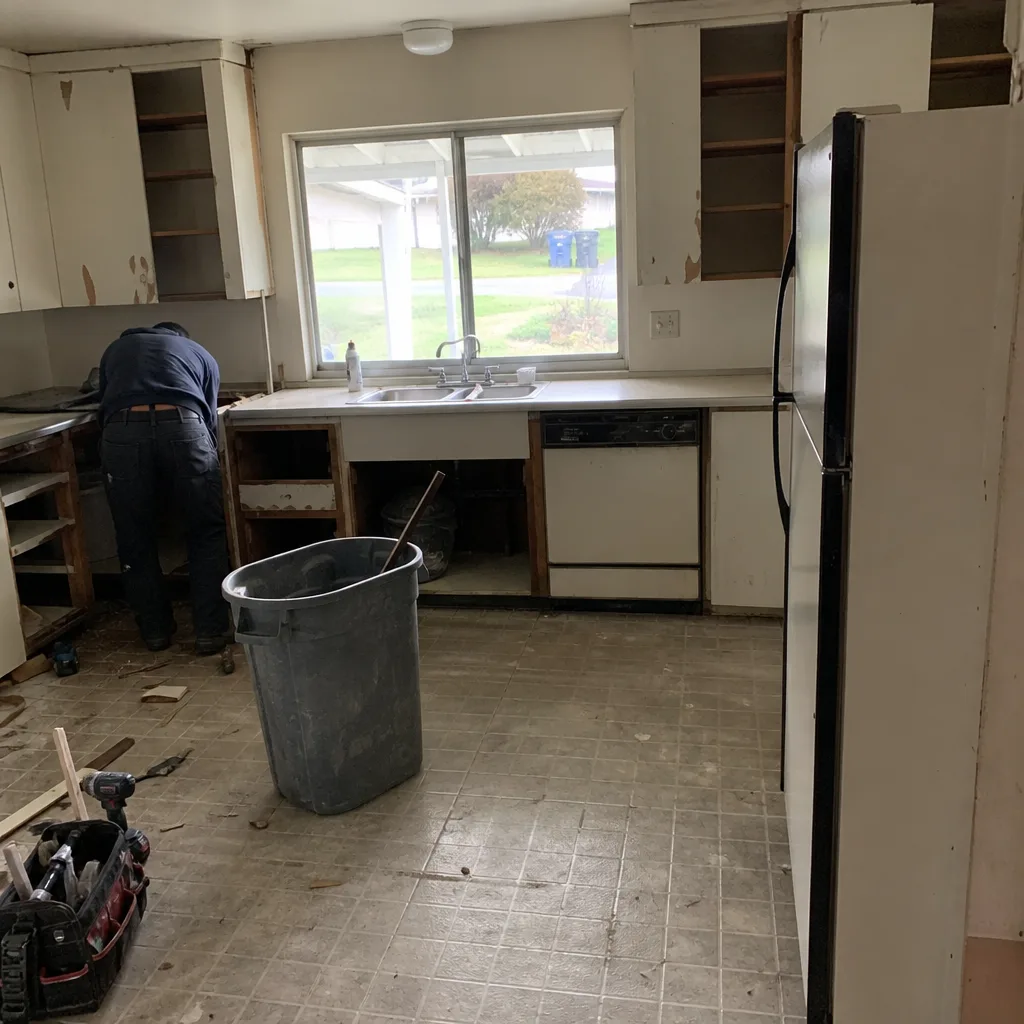 Before
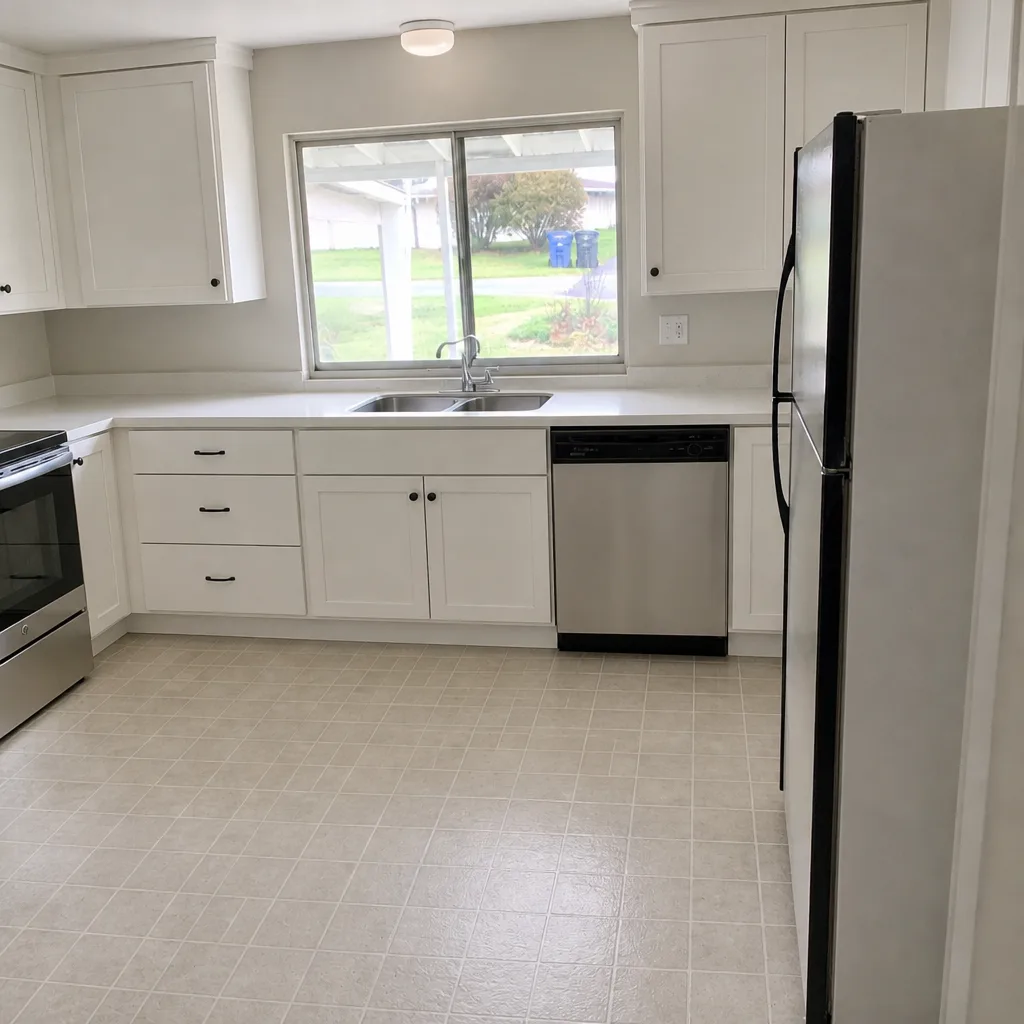 After
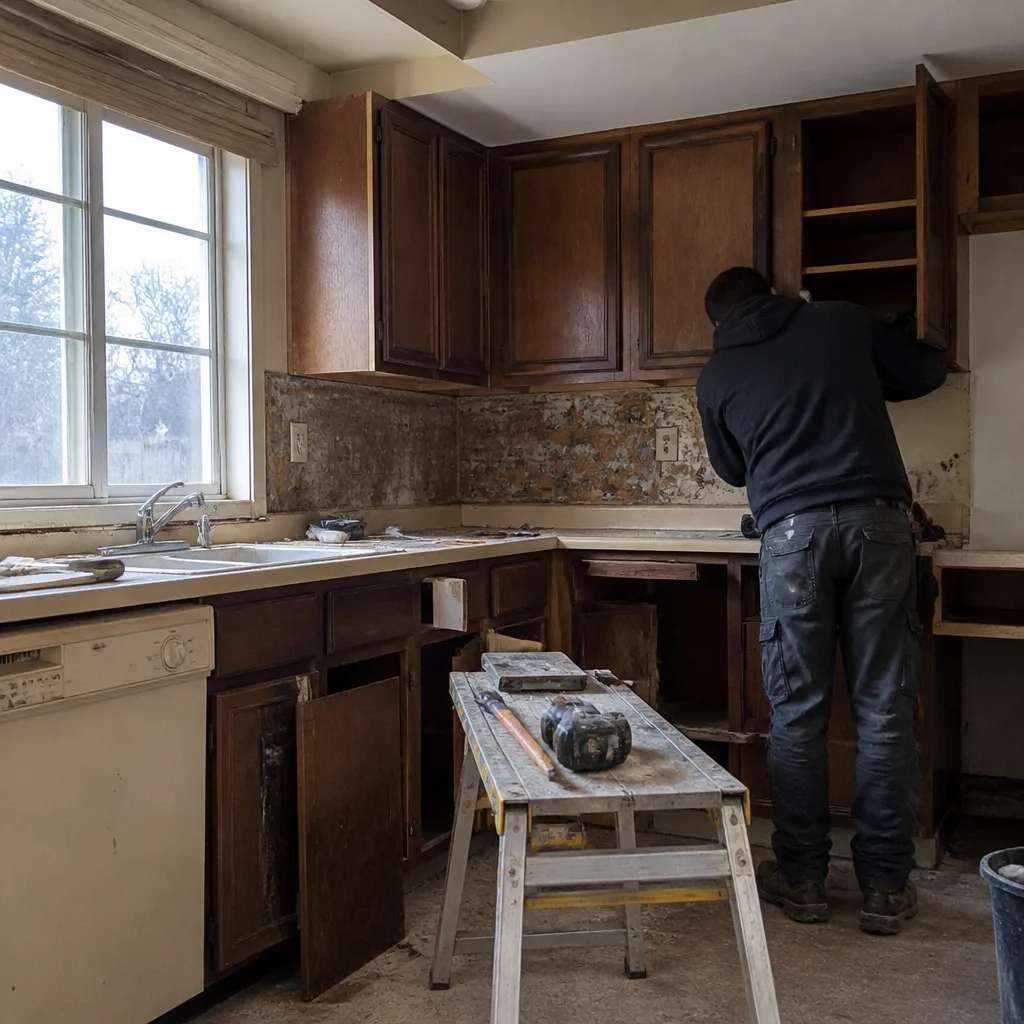 Before
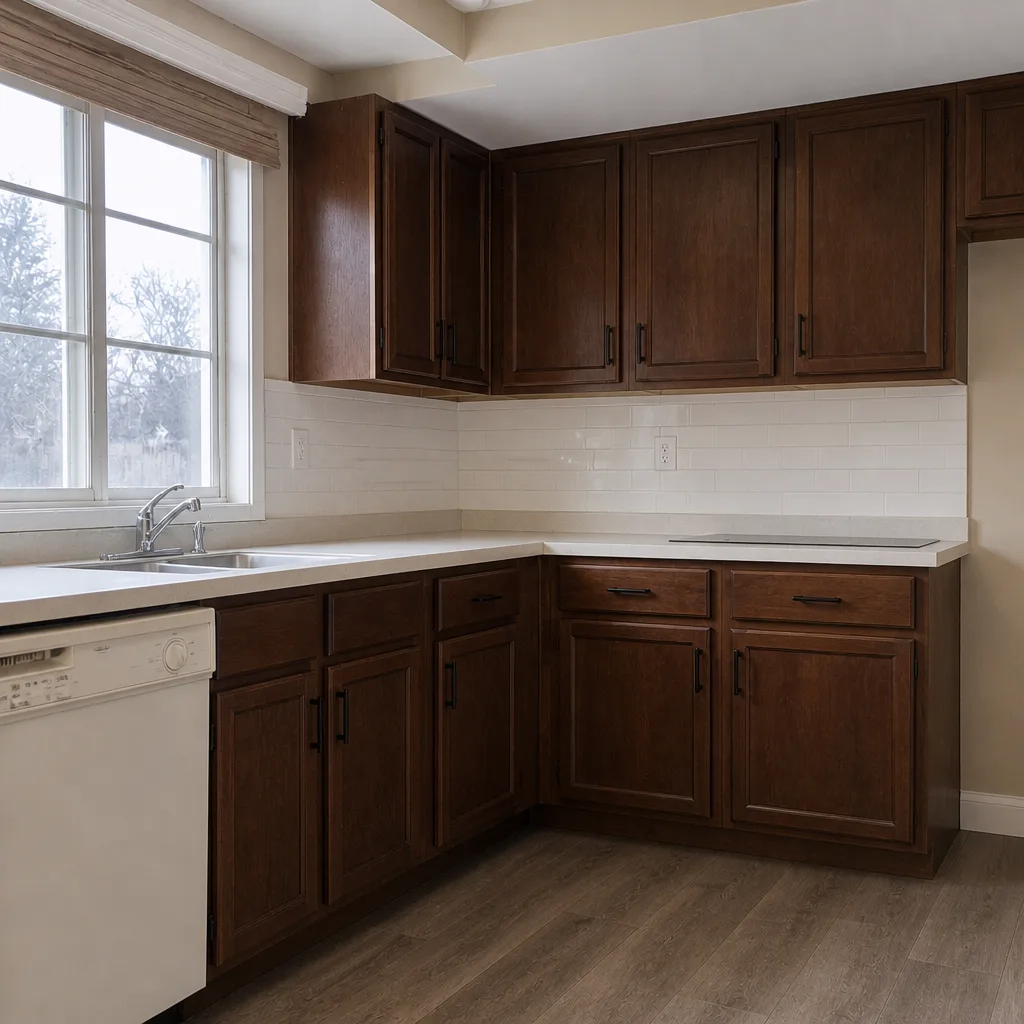 After
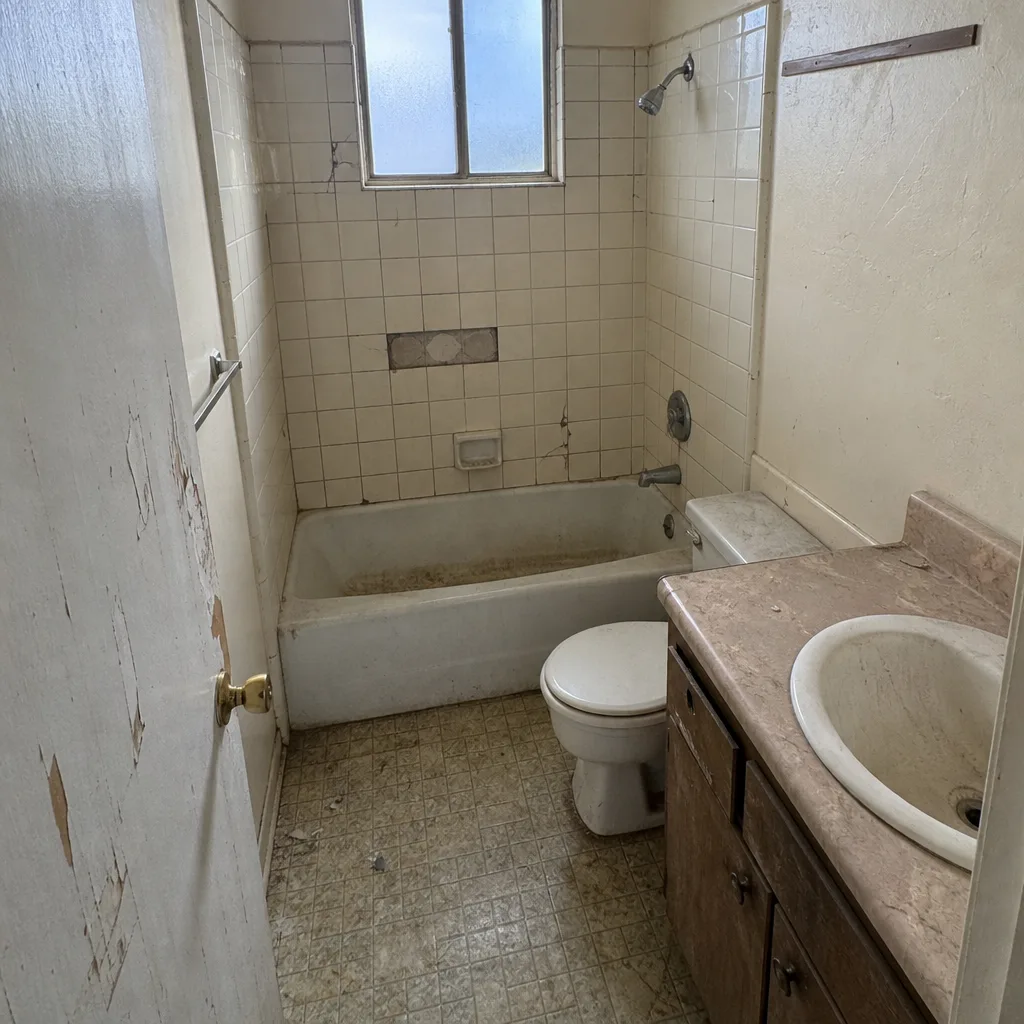 Before
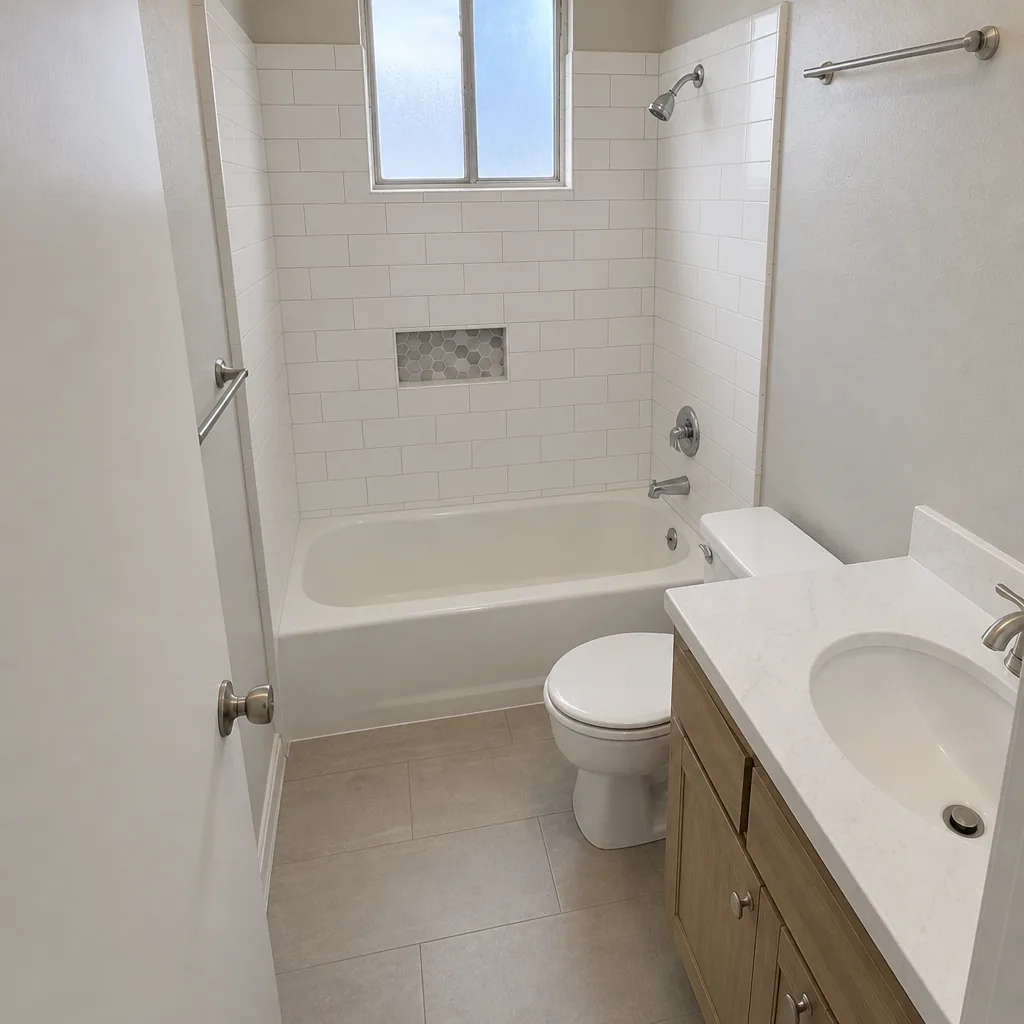 After
When to Call a Professional
Some warning signs are judgment calls you can make yourself. Some are symptoms a trained eye needs to evaluate. Call a professional if you’re seeing any of these in the first year of a completed remodel:
- Grout failing across the field of the tile, not just at joints, or a shower that smells musty after a week of not being used.
- Cupping or buckling in the floor beyond a single board, or moisture staining around a floor transition.
- Water stains at a ceiling, a wall inside the house, or around a window or door frame. These are flashing and sealant issues, and they get worse fast.
- Paint failing in one section of siding or a trim area, especially below a roofline or under a window.
- A contractor who won’t return a call about the first-year punch list.
If the work is small or clearly a normal-settling case, a phone conversation will tell you. If it’s a flashing or shower assembly failure, it’s worth the site visit and a written plan. Remodeling Redmond offers free estimates in Redmond – call Remodeling Redmond at (425) 675-1664 to schedule one. If the problem traces back to an installation detail, we can walk you through what failing on the same clock looks like in homes across Redmond, and what the repair scope is likely to involve.
Frequently Asked Questions

The biggest red flag is a contractor who can’t produce a line-item written estimate naming specific products. Without it, every other decision – substitution, warranty, schedule – becomes a verbal understanding that favors the contractor. If they can name the product and price the line, the rest follows.
Some scopes don’t require a permit – painting, replacing fixtures in the same location, some cosmetic work. But a bathroom or kitchen project with plumbing relocation, electrical changes, or structural work requires a permit. A contractor who says otherwise is either misinformed or taking shortcuts. Ask your city’s building department to confirm the requirement for your specific scope.
Ask before signing: which trades will be subbed, who the subs are, and how long the contractor has worked with each. A well-organized contractor names them. If the answer changes between contract and job start, ask why. You have the right to know who is in your house.
Normal settling is hairline grout cracking at joints – the floor-to-wall transition, the corners of the shower. What’s not normal: grout failing across the field of the tile, a shower that stays damp after a day, or a floor that cups. Those are install issues and worth a first-year call.
Immediately. In Redmond, the first wet season after a remodel tests every exterior detail. A section of siding with failing paint or a window that weeps is a sign of moisture entry, and it’s much cheaper to fix before rot sets in. Call as soon as you notice it.
Line items per trade, named products (manufacturer and model), quantities, permit costs, disposal costs, and a schedule. It should also spell out how change orders are handled and what workmanship warranty applies. If it doesn’t have those, ask for a revised estimate before signing.
The Bottom Line
The contractor to worry about isn’t the one who takes the money and runs. It’s the one who finishes, gets paid, and leaves you with a shower that smells musty in year two. The signs are visible before you sign: vague specifications, permit avoidance, unnamed subs, a job site with no clear lead, and a first-year punch list nobody answers. Get the line-item written estimate, get the permits pulled, walk the site in week one, and watch the first year. If you find yourself needing a second set of eyes, call (425) 675-1664. We answer 24/7. Fast dispatch from 7am to 7pm, Sunday through Friday. Estimates are free, and the written estimate sets the final price.
Written by the team at Remodeling Redmond.